
By Humar Family Affair
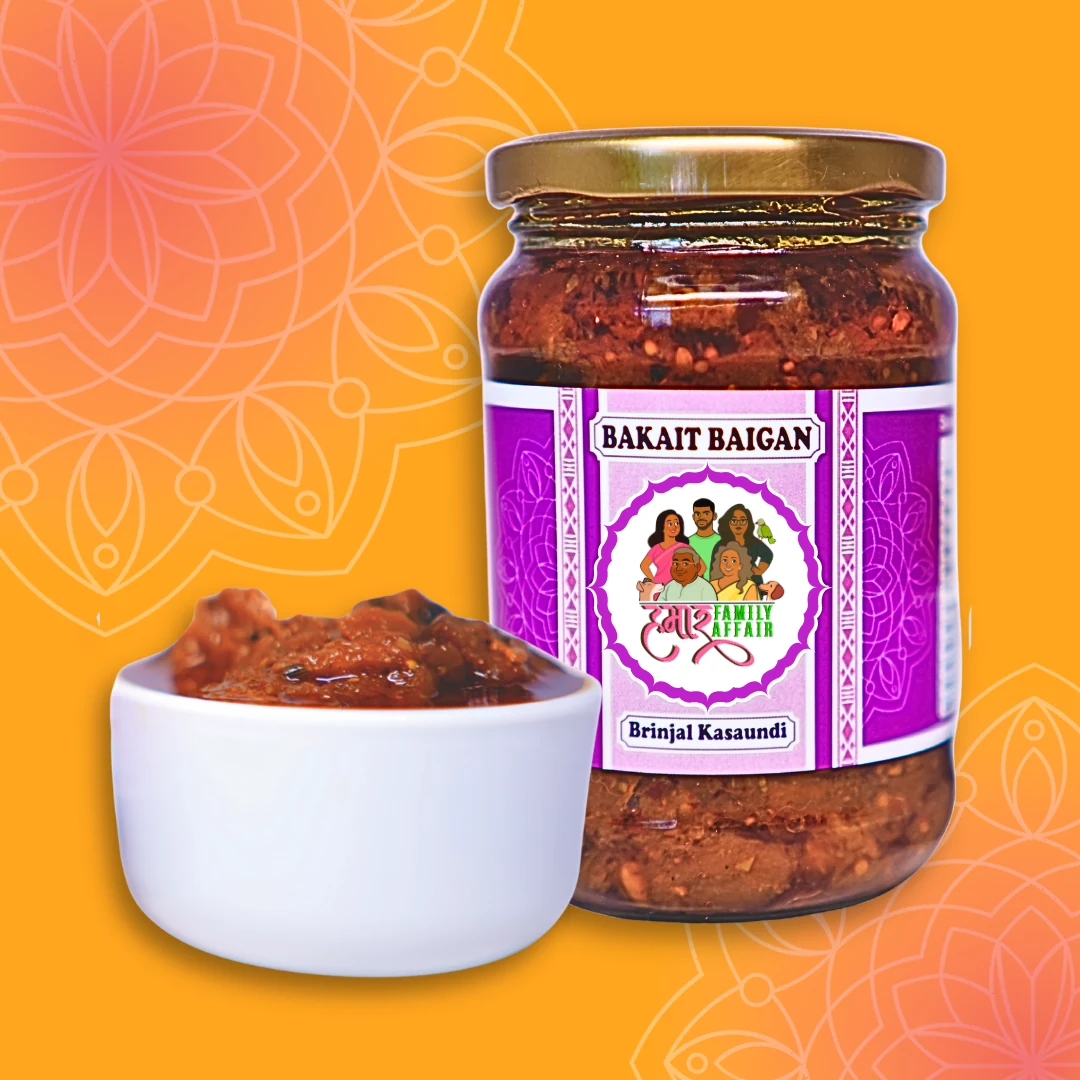
Our brinjal kasaundi is a spiced accompaniment made around brinjal, tamarind, jaggery and an aromatic mustard-oil seasoning. Humar Family Affair calls it Bakait Baigan: a jar for anyone who enjoys sweet, sour, tangy and spicy flavours together.
What makes this brinjal kasaundi distinctive?
The name kasaundi can raise different expectations depending on the recipes you grew up with. This guide is about our brinjal-based version, rather than a claim that every kasaundi follows the same recipe.
In Bakait Baigan, brinjal sits alongside ginger, garlic, curry leaves, tamarind, jaggery, jamun vinegar, mustard oil and spices. Tamarind and vinegar contribute the sour side of the recipe; jaggery contributes sweetness. Mustard, fennel, fenugreek, nigella and chilli build the seasoning around them.
That combination gives you several reasons to reach for the jar. With a simple meal, it adds a concentrated spoonful of flavour. With a richer meal, its tang can provide a welcome change between bites.
What does it taste like?
Our recipe description centres on four words: sweet, sour, tangy and spicy. Think of those as a combination, rather than four separate stages you must taste in a particular order. The amount you serve and the food beside it will influence your experience.
If you are trying it for the first time, place a small amount at the side of your plate. Taste it with a bite of rice or roti before deciding whether you want more. You do not need to mix it into the whole meal to enjoy it.
Five ways to serve brinjal kasaundi
- Beside dal and rice. Keep the dal’s seasoning simple and use the kasaundi as an optional accompaniment.
- With plain or stuffed parathas. Serve it separately so each person can choose their own amount.
- Alongside khichdi. A small portion offers a change of texture and flavour with a soft, comforting meal.
- In a roti roll. Try a light layer with your usual cooked filling. Start sparingly so it complements the filling.
- On a small tasting plate. Serve brinjal kasaundi beside another pickle with separate spoons, and compare them with the same simple food.
These are serving suggestions, not changes to the jar’s storage directions. Keep the main jar away from used plates and return it to its specified storage place after serving.
Brinjal kasaundi or karela kasaundi?
| Your preference | A useful starting point |
|---|---|
| You want to explore brinjal in a new form. | Bakait Baigan, our brinjal kasaundi. |
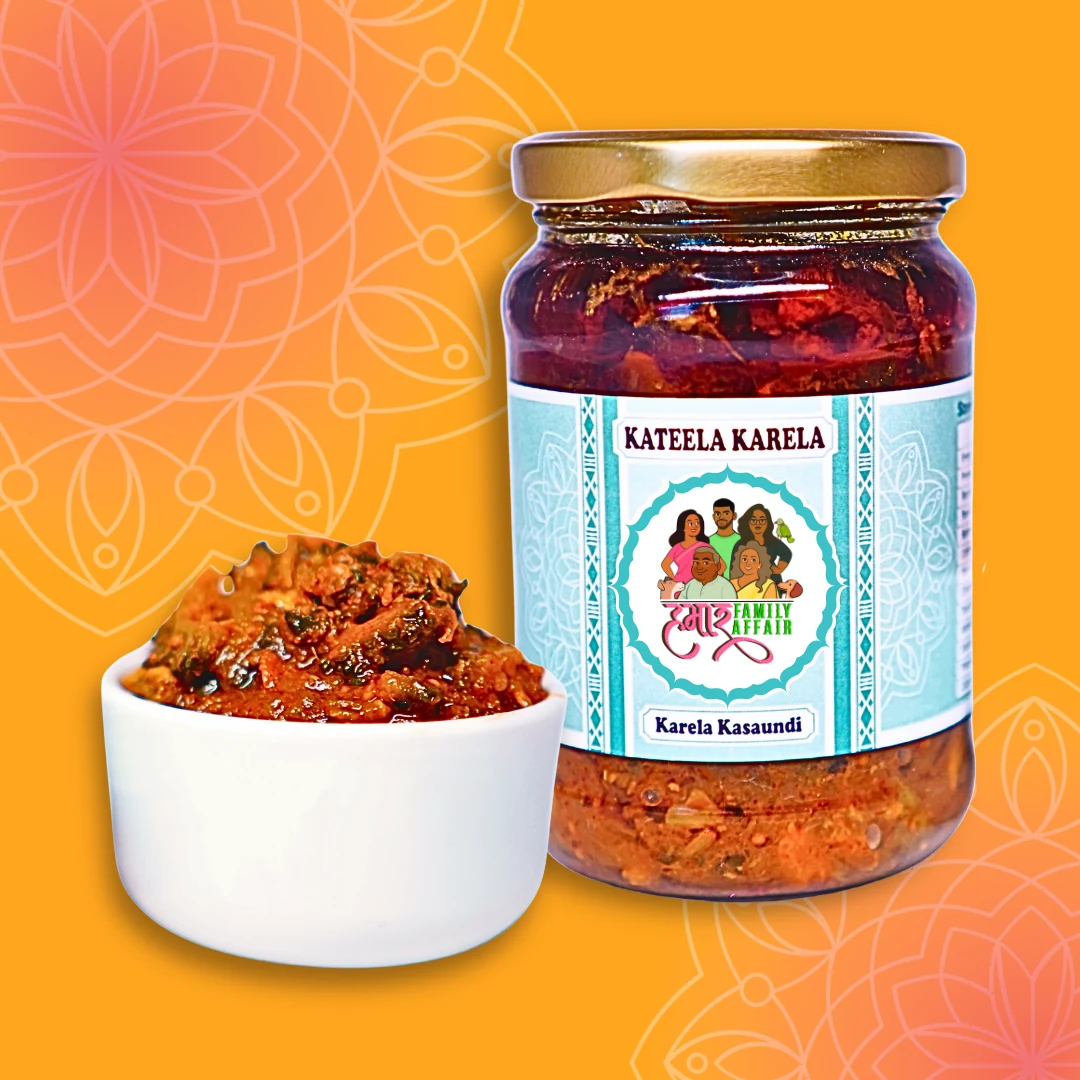
| You enjoy the distinctive character of bitter gourd. | Kateela Karela, which combines karela with sweet-sour seasoning. |
| You want to compare both recipes. | Explore the Kasaundi collection, or check which flavours are currently offered in the six-jar box. |
Neither choice requires you to abandon your usual pickle. They can occupy different places on the same table: one familiar jar for everyday comfort, another for a different flavour.
What to check before ordering
Read the full ingredients and allergen information, particularly if you are avoiding mustard, garlic or another specific ingredient. Choose the jar size from the current product page and follow the storage instructions on the jar you receive.
If your question is “Will I enjoy this?”, start with the recipe’s flavour description and the meals you normally eat. If your question concerns a dietary requirement, contact us for the precise product information rather than deciding from a flavour description.
Explore Bakait Baigan brinjal kasaundi, or browse both recipes in our Kasaundi collection.
Recipe descriptions, ingredient information and original product photographs: Humar Family Affair.
A short introduction to Humar Family Affair
Our existing animated brand film. The animation illustrates the brand story; it is not documentary footage of production. Original product photographs accompany this article.
