
By Humar Family Affair
Bilona ghee refers to a traditional route in which curd is churned to obtain butter, and that butter is clarified into ghee. The useful buying question is how the milk becomes the finished jar: the milk source, churning stage, heating method and product information all help explain what you are choosing.
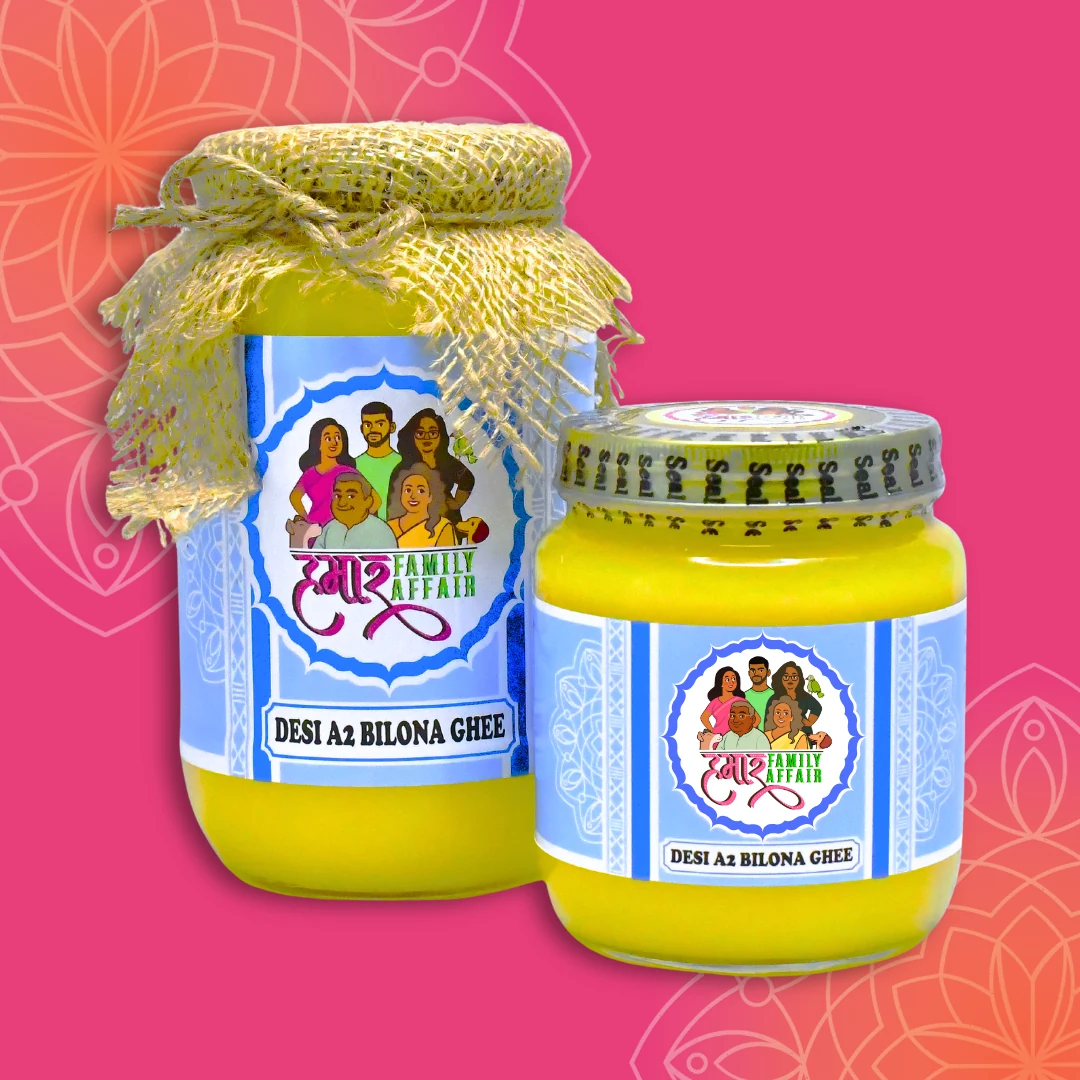
What does the bilona process involve?
The traditional curd-to-butter route is different from beginning with separated cream. ICAR–National Dairy Research Institute describes traditional ghee preparation from curd, and dairy research describes the stages of curd formation, churning and clarification.
At a high level, the sequence is:
- Milk is prepared and set into curd. This creates the starting material for the traditional churning route.
- The curd is churned. Butter is obtained and separated from the liquid portion.
- The butter is heated and clarified. This develops the finished ghee while removing moisture and separating the remaining solids.
- The ghee is packed. The maker’s handling, packaging and storage instructions remain part of the product’s quality.
This explains a process, rather than providing a home production or preservation recipe. A seller should be able to describe its own method clearly instead of relying only on the word “traditional”.
How Humar Family Affair describes its ghee
Our Desi A2 Bilona Ghee is made from the milk of Sahiwal cows using the bilona method. Our brand’s product description specifies cooking in clay pots over a wood fire.
Those are the production details behind our jar. If you want to understand a particular batch or need information that is not on the product page, ask us directly. A useful answer should relate to the product supplied, not simply repeat a broad claim about every ghee.
A2, bilona and the milk source answer different questions
These words are often placed together in a product name, but it helps to separate them when shopping. Bilona describes the production route. The milk-source description tells you what milk the maker says it uses. The A2 description in our product name should not replace questions about either source or method.
For a meaningful comparison, ask each maker the same practical questions: What milk is used? Is the butter obtained through curd churning? How is it clarified? What information is available for the jar or batch?
A simple buying checklist
| Check | What a useful answer looks like |
|---|---|
| Milk source | A specific description of the source used for that product. |
| Production method | An explanation of the curd, butter and clarification stages. |
| Ingredients | A clear declaration on the pack. |
| Pack details | Net quantity, batch/date information and the maker’s contact details. |
| Storage | Directions that apply to the product you receive. |
| Price comparison | Compare the same stated quantity and account for the actual pack size. |
A photograph can show colour and packaging, but it cannot show the complete production history. Graininess, a bright colour or an attractive jar should not stand in for clear information from the maker.
Ways to enjoy it in everyday meals
Start with a familiar dish where you can appreciate the aroma. Try a little on warm rice, with dal, over a freshly cooked roti or in a recipe you already make with ghee.
If you are comparing products for flavour, use the same simple food for each and serve similar small portions. That makes the comparison easier than changing the ghee and the whole recipe at once.
Choose the amount according to the dish and your own preferences. The production method is useful information about the food; it is not a reason to make unverified health promises about it.
Look after the jar you open
Use clean, dry utensils and close the lid after use. Follow the pack’s storage and date directions. If anything about the packaging, contents or instructions is unclear, contact the maker with the batch details before continuing to use it.
For current sizes and product details, visit Desi A2 Bilona Ghee. Our brand story explains the family approach behind the rest of our range.
Process references: ICAR–NDRI annual report: traditional curd and cream routes; Indian Journal of Dairy Science: ghee preparation process. Brand-specific production information and photographs: Humar Family Affair.
A short introduction to Humar Family Affair
Our existing animated brand film. The animation illustrates the brand story; it is not documentary footage of production. Original product photographs accompany this article.
